Why Are Remote Clinical Trials Becoming More Popular?

Time:2026-10-16 Author:Sophia
0%

The question, why are remote clinical trials becoming more popular, reflects a major shift in clinical research delivery. Digital visits, home nursing, wearable sensors, and electronic consent now connect participants with study teams beyond hospital walls. The IQVIA Institute’s Global Trends in R&D 2024 reported more than 20,000 medicines in development worldwide. That scale increases pressure to recruit suitable participants efficiently. It also exposes familiar weaknesses, including travel burdens, missed visits, and uneven site access. Remote methods can reduce some of these barriers. They cannot remove every barrier.

Regulators are responding carefully. The U.S. Food and Drug Administration’s May 2024 guidance on decentralized clinical trials describes expectations for remote visits, in-home services, digital health technologies, safety monitoring, and data quality. These details matter. A participant may complete a blood pressure check in a quiet kitchen, rather than a crowded clinic. Yet convenience does not automatically equal inclusion. Some patients lack reliable internet, private space, or confidence with mobile devices. The European Medicines Agency has also emphasized proportionate, risk-based trial design and participant protection in its clinical research guidance. These developments help explain the growing interest in remote models, but they also demand practical judgment. Sponsors must validate devices, train investigators, protect personal data, and preserve meaningful contact with participants. The model is promising, not perfect. This article examines the evidence, operational lessons, and unresolved questions behind the continuing rise of remote clinical trials.
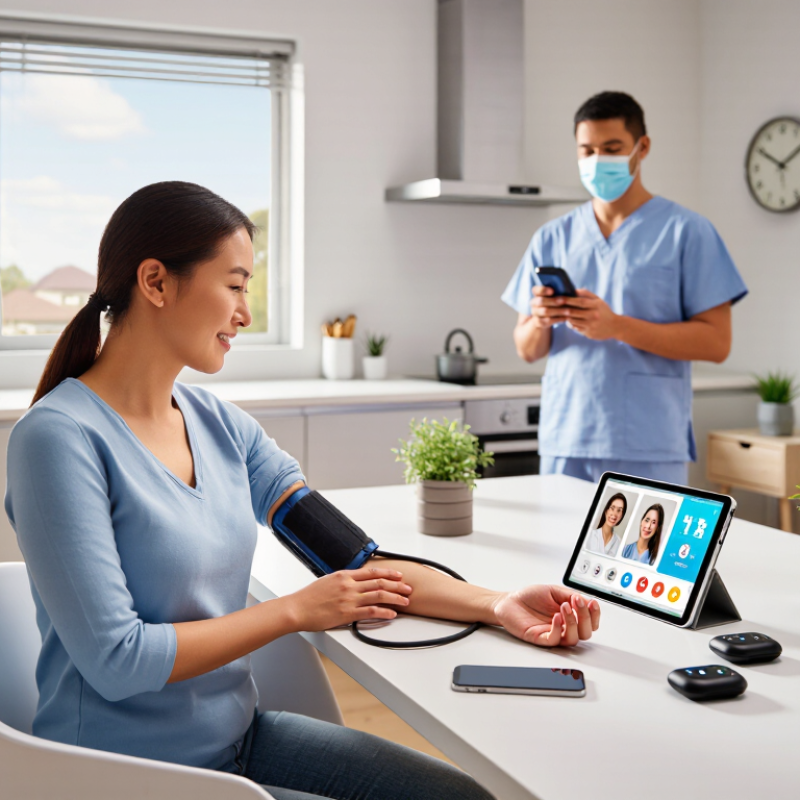
Why Are Remote Clinical Trials Becoming More Popular?

What Are Remote Clinical Trials?

Remote clinical trials are studies that collect some trial data away from a traditional research site. Participants may complete video visits, answer smartphone questionnaires, or receive study materials at home. Local nurses can perform scheduled checks, while wearable devices record activity, heart rate, or sleep.

The model is practical, but not entirely effortless. A participant might join a video visit from a kitchen table, then use a connected blood-pressure monitor before work. The research team must verify device accuracy, protect personal data, and respond quickly when readings look unusual. The U.S. Food and Drug Administration’s 2024 draft guidance on decentralized clinical trials emphasizes clear oversight, informed consent, safety monitoring, and reliable data collection.

Recruitment pressure helps explain the growing interest. Tufts Center for the Study of Drug Development has reported that about 80% of clinical trials fail to meet enrollment timelines, while nearly half of research sites enroll one participant or none. Remote options can reduce travel, missed work, and dependence on nearby hospitals. A 2023 CISCRP global survey also reported that convenience strongly influences people’s willingness to consider clinical research. Yet access is uneven. Some participants lack stable internet, private space, or confidence with digital tools. A remote trial can widen participation, but it can also exclude people quietly. That contradiction deserves more attention.

How Do Remote Clinical Trials Work?

Remote clinical trials work by moving selected study activities closer to participants. Telehealth visits replace some clinic appointments. Trained nurses may collect blood samples at home. Participants can also use wearable sensors, mobile apps, and electronic diaries. Data then moves to a secure research platform for review. The U.S. Food and Drug Administration’s decentralized-trial guidance stresses investigator oversight, informed consent, safety monitoring, and reliable data handling. About 70% of potential participants live more than two hours from a research site, according to the Center for Information and Study on Clinical Research Participation. That distance can quietly exclude people.

The model is not frictionless. A weak internet connection can interrupt a video visit. A participant may forget to charge a sensor. Home procedures also require clear training and backup support. Remote trials should use validated devices, simple instructions, multilingual materials, and privacy safeguards. The Drug Information Association’s 2023 industry research identified patient access and recruitment as major reasons for adopting decentralized methods. Yet convenience alone cannot prove better data. Investigators still need documented calibration, timely adverse-event reporting, and regular contact with participants. More remote does not always mean more inclusive.

Tips: Explain each step before enrollment. Test the device with the participant. Offer telephone support, not only an app. Build a paper or local-clinic backup plan. Ask whether travel, language, disability, or digital skills could affect participation. Small gaps matter.

Why Are Remote Clinical Trials Becoming More Popular? - How Do Remote Clinical Trials Work?
Data Dimension What Happens in a Remote Clinical Trial Why It Increases Trial Accessibility or Efficiency Established Evidence or Regulatory Position
Participant recruitment Potential participants can be screened through online forms, telephone interviews, video visits, and electronic medical-record reviews where permitted. Recruitment is not limited to people who live near a research site, which can improve geographic reach and access for rural or mobility-limited participants. Decentralized trial guidance recognizes remote recruitment and informed-consent activities as possible trial procedures when appropriate safeguards are in place.
Informed consent Investigators may explain the study by video or telephone, provide electronic documents, and obtain electronic signatures when legally and technically acceptable. Participants can review study information at home and avoid an initial in-person visit. Electronic informed consent must preserve comprehension, voluntariness, documentation, and the participant’s ability to ask questions.
Study visits Some scheduled visits are completed by video consultation, telephone, secure messaging, or remote assessments instead of travel to a research site. Fewer journeys reduce travel time, transport costs, missed work, and dependence on caregivers. Remote visits are suitable only when the procedure can be performed reliably and participant safety can be maintained.
Home health visits Trained healthcare professionals may visit a participant’s home to collect blood samples, measure vital signs, administer certain assessments, or support study procedures. Home services can make participation possible for people with limited mobility or those living far from specialist research centers. Home-based procedures require qualified personnel, documented training, standardized procedures, and appropriate sample-handling controls.
Remote data collection Participants may enter questionnaires through a secure electronic system or report symptoms and medication use from home. Data can be collected closer to the time an event occurs, reducing travel and supporting more frequent monitoring. Electronic patient-reported outcomes should use validated instruments when available, with controlled access and an auditable record of data changes.
Wearable and connected devices Approved or validated devices can record measures such as physical activity, heart rate, sleep patterns, blood pressure, or glucose levels. Continuous or frequent measurements may capture changes that are missed during occasional clinic visits. Device accuracy, calibration, data transfer, cybersecurity, usability, and the clinical meaning of the measure must be evaluated before use.
Investigational product delivery Study medication may be shipped directly to the participant or dispensed through a local healthcare setting when permitted by the protocol and applicable law. Direct delivery can reduce pharmacy visits and help participants follow the planned treatment schedule. Temperature control, chain of custody, dispensing records, accountability, labeling, and participant instructions must be maintained.
Safety monitoring Adverse events can be reported through telephone, video visits, electronic diaries, secure messaging, or home assessments. Frequent remote contact can allow earlier identification of symptoms while reducing unnecessary site visits. Remote monitoring does not replace emergency care. Protocols must clearly define escalation procedures and when an in-person examination is required.
Laboratory testing Samples may be collected at home, by a mobile professional, or at a qualified local laboratory and then transferred to the designated testing facility. Participants can complete required testing closer to home, improving convenience and potentially reducing missed visits. Collection, processing, storage, shipment, and laboratory analysis must follow the protocol and preserve sample integrity.
Retention and visit burden The protocol combines only the necessary in-person visits with remote procedures, rather than requiring every assessment at a central site. Lower travel and scheduling burden can make it easier for participants to remain in the study, although retention still depends on study design and participant support. Remote elements should be selected based on participant safety, data quality, feasibility, and the scientific needs of the study—not convenience alone.
Data quality and oversight Study data are transferred through validated electronic systems and reviewed centrally, with source records and system activity retained for inspection. Centralized review can identify missing data, protocol deviations, and safety signals across locations more consistently. Good clinical practice requires reliable, traceable, secure, and attributable data regardless of whether collection occurs remotely or at a research site.
Privacy and cybersecurity Remote trials use secure communication platforms, identity verification, access controls, encryption, and procedures for handling personal health information. Strong controls help protect sensitive information while allowing participants, investigators, vendors, and laboratories to exchange study data. Privacy and security obligations continue to apply to telehealth, electronic consent, connected devices, electronic records, and data transfers.
Hybrid trial design Many studies combine remote visits and digital data collection with selected in-person examinations, imaging, procedures, or specialist assessments. A hybrid design preserves essential clinical evaluations while reducing avoidable participant travel. Regulatory guidance generally supports decentralized elements when they are appropriate for the investigational product, population, endpoint, and risk level.
Note: Remote clinical trials are not necessarily fully virtual. The proportion of remote activities depends on the investigational product, study population, clinical endpoints, safety requirements, local law, and the capabilities of the research team.

Why Are Remote Clinical Trials Gaining Popularity?

Remote clinical trials are gaining popularity because they fit real patient routines. Participants can complete questionnaires at home, use wearable devices, and visit nearby clinics instead of travelling long distances. The 2023 FDA guidance on decentralized clinical trials recognizes telehealth, home visits, and local healthcare providers as practical trial elements. These options can reduce missed appointments, especially for people with mobility challenges or demanding work schedules. Convenience matters.

Industry data also supports this shift. A 2023 survey from the Center for Information and Study on Clinical Research Participation reported that 72% of respondents considered reducing travel important when choosing a clinical trial. The 2024 Global Trends in Clinical Trials report from a leading research consultancy found that decentralized tools were increasingly used for recruitment, remote consent, and patient monitoring. However, adoption is uneven. Digital access, device literacy, and reliable internet still exclude some communities.

The patient experience becomes more visible.

From a site perspective, remote visits may improve retention, but they create new operational risks. Investigators must verify data quality, protect personal information, and respond quickly when wearable readings appear abnormal. In practice, a participant may forget to charge a device or misunderstand an app notification. That small detail can affect a study’s reliability. Remote trials are popular because they remove friction, not because they remove complexity. Better training and flexible support remain necessary.

What Benefits Do They Offer to Patients and Researchers?

Why Are Remote Clinical Trials Becoming More Popular?

What Benefits Do They Offer to Patients and Researchers?

Remote clinical trials are becoming more popular because they bring research closer to daily life. Instead of repeated hospital visits, participants may complete questionnaires at home. Nurses can conduct scheduled video calls, while approved devices record blood pressure, sleep, or movement. This setup helps people living far from research centers, including those with limited mobility or demanding work schedules. It can also reduce travel costs and time away from family.

Small conveniences matter. A quiet kitchen may produce more honest answers than a rushed waiting room.

Researchers gain access to broader participant groups, not only people living near major hospitals. More frequent digital measurements can reveal changes between clinic appointments. That may help teams notice patterns earlier and assess how a treatment affects ordinary routines. Remote processes can also reduce paperwork and improve data collection when systems are carefully designed.

Still, convenience is not the same as inclusion. Some participants lack reliable internet, private space, or confidence using digital tools. Technical support and non-digital options remain essential.

Safety and trust require close attention. Participants need clear consent information, simple instructions, and prompt contact with trained staff when symptoms change. Researchers must protect health data and explain who can access it. These responsibilities require documented procedures, staff training, and regular quality checks.

Remote trials are not automatically better. A dropped connection can interrupt an assessment, and self-reported measurements may be less precise than clinical tests. The strongest studies combine remote access with human oversight. That balance is still developing.

What Challenges Affect Their Use and Reliability?

Remote clinical trials are gaining attention because participants can complete visits at home. A nurse may collect blood beside a kitchen table, while sensors record movement overnight. This reduces travel and may improve access for rural patients. The 2023 CISCRP Perceptions and Insights Study reported that 70% of participants valued flexible trial participation options. Convenience matters, but it does not guarantee reliable evidence.

Technology creates new weaknesses. A home blood-pressure reading may follow an unclear procedure. A device can lose connection during sleep. Participants may also share phones, lack stable internet, or struggle with digital forms. The Tufts Center for the Study of Drug Development has reported that about 55% of clinical trial sites fail to enroll a single participant. Remote methods may widen recruitment, yet they cannot repair unclear eligibility rules or poor communication. Sometimes, convenience hides confusion.

Data quality needs active control. The FDA’s 2023 guidance on decentralized clinical trials recommends clear oversight, validated tools, and documented responsibility for remote activities. That sounds practical, but implementation remains uneven. In a 2023 industry survey by the Decentralized Trials Research Alliance, 76% of respondents identified technology integration as a major challenge. Researchers must check missing readings, device calibration, delayed uploads, and unusual patterns. I would not treat a quiet dashboard as proof of compliance. Human follow-up still matters, especially when a participant feels too embarrassed to report a problem.

Why Are Remote Clinical Trials Becoming More Popular?

What Challenges Affect Their Use and Reliability?

Remote and decentralized clinical trials are becoming more attractive because they can reduce travel, broaden geographic access, and make participation more convenient. However, their reliability depends on digital access, participant support, data-quality controls, privacy protection, and effective safety oversight. The indicators below show the scale of both the opportunity and the implementation challenge; they are contextual indicators rather than a direct estimate of trial adoption.

Sources: International Telecommunication Union, Facts and Figures 2023; Pew Research Center, Mobile Fact Sheet, 2024; U.S. Centers for Disease Control and Prevention, Disability and Health Data, 2023; U.S. Food and Drug Administration, Decentralized Clinical Trials for Drugs, Biological Products, and Devices, 2024.

FAQS

What is a remote clinical trial?

It collects some study data outside a traditional research site. Participants may join video visits, answer phone questionnaires, or receive supplies at home.

What can participants do from home?

They may check blood pressure, report symptoms, or wear sensors overnight. A nurse might collect a sample beside the kitchen table.

How can remote trials help participants?

They can reduce travel, missed work, and childcare difficulties. This may help rural residents and people with limited mobility.

How can researchers benefit from remote participation?

Researchers can reach people who live far from major hospitals. Frequent digital readings may reveal changes between clinic appointments.

Are remote trials automatically easier?

No. A dropped video call can interrupt an assessment. A confusing device can produce unreliable readings.

What technology problems can occur?

Internet service may fail. A sensor may disconnect during sleep. Some people share phones or struggle with digital forms.

How is participant safety protected?

Teams need clear consent information, trained staff, and quick contact when symptoms change. Unusual readings require human follow-up, not silence.

Can remote trials exclude people?

Yes. People without stable internet, private rooms, or digital confidence may be left behind quietly. Non-digital options still matter.

How do researchers check data quality?

They review missing readings, delayed uploads, device calibration, and unusual patterns. A quiet dashboard is not proof of compliance.

What makes a remote trial trustworthy?

Reliable devices, simple instructions, protected health data, and regular staff contact are essential. Convenience helps, but it is not enough.

Conclusion

Remote clinical trials are research studies designed to collect health data without requiring participants to visit a central study site frequently. Instead, patients may complete online questionnaires, use wearable or home-monitoring devices, attend video consultations, and receive study materials at home. Researchers coordinate these activities through secure digital systems, review the collected information, and maintain communication with participants throughout the study.

The question “why are remote clinical trials becoming more popular” can be answered by their convenience, broader accessibility, and potential to reduce travel, time, and participation barriers. They may help researchers reach people from different locations and gather information in everyday settings, while patients can take part with less disruption to their routines. However, remote trials also face challenges, including unequal access to technology, privacy concerns, inconsistent device use, limited physical examinations, and difficulties verifying data quality. Clear instructions, reliable support, appropriate monitoring, and careful study design are essential to ensure that results remain accurate and trustworthy.

Sophia

Sophia

Sophia is a dedicated marketing professional with an exceptional depth of knowledge about her company's products and services. With a keen understanding of market trends and customer needs, she crafts insightful blog posts that not only inform but also engage readers, enriching the company’s online......