China Top Remote Clinical Trial Technologies Used?

Time:2026-11-03 Author:Aria
0%

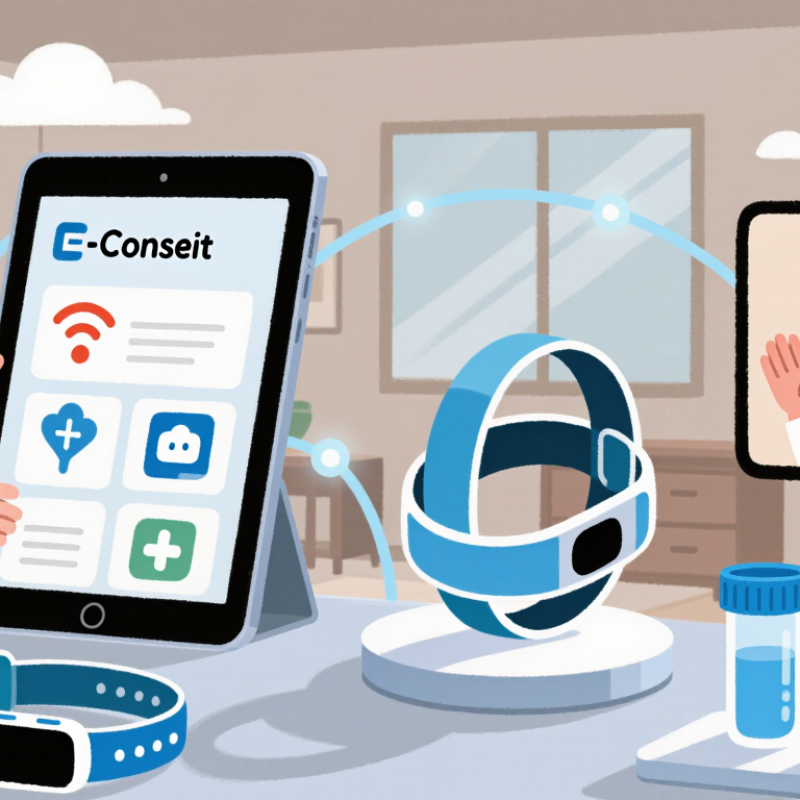
Remote clinical trials in China are built from connected tools, not one magic app. The practical question is “what technologies are used in remote clinical trials”? Common components include eConsent, electronic patient-reported outcomes, video visits, wearable sensors, home sample collection, and cloud-based data platforms. A participant might complete a symptom diary on a phone, wear an activity tracker, then speak with a study clinician by video. Simple to describe. Harder to run well.

McKinsey’s 2020 report, The Future of Healthcare: Value Creation Through Next-Generation Clinical Trials, examined how digital and decentralized approaches could reshape trial operations. Its central lesson is practical: remote methods can reduce participation burdens, but they do not remove the need for careful study design and reliable data. The U.S. FDA’s 2023 guidance on decentralized clinical trials likewise addresses remote visits, local healthcare providers, and investigational products delivered to participants. China’s NMPA has also issued guidance on managing drug trials during public-health disruptions, underscoring the need for documented procedures and participant safety.

Jennifer Goldsack, CEO of the Digital Medicine Society, has emphasized that digital measures should be fit for purpose and clinically meaningful. That standard matters. A wrist sensor may capture movement, but movement alone may not explain a patient’s condition. China’s remote-trial technology stack can include eCOA platforms, telemedicine, wearable devices, electronic source records, and remote monitoring. Yet reliable connectivity, clear workflows, and support for older participants still deserve more attention. Not every screen helps. The technology must serve the protocol, not distract from it.
China Top Remote Clinical Trial Technologies Used?

Digital Infrastructure for Remote Clinical Trials in China

China Top Remote Clinical Trial Technologies Used?

China’s remote clinical trial infrastructure connects participants, clinical sites, and study teams through secure digital systems. Mobile apps can support electronic consent, symptom diaries, and scheduled video visits. Some studies also use wearable sensors to record activity or other relevant measurements. The technology should fit the study, not the other way around.

Reliable connectivity matters. A participant in a major city may have stable video access, while someone elsewhere may need offline forms that sync later. Clear instructions, local-language support, and a reachable study coordinator help prevent small technical issues from becoming missed data. Simple details matter.

Behind the participant-facing tools, clinical teams need controlled access, time-stamped records, and routine checks for incomplete or inconsistent entries. Data storage and transfer should follow applicable Chinese requirements and the study’s approved procedures. Integrating app records with site workflows can reduce duplicate entry, but poor integration can create new errors. Remote monitoring is useful, not effortless. Teams should test devices, explain what they cannot measure, and offer a non-digital option when needed. A dropped connection is not a clinical finding.

China’s Digital Infrastructure for Remote Clinical Trials

Internet penetration, 2018–2024

Wider internet access supports remote-trial capabilities such as telehealth visits, electronic patient-reported outcomes, and remote data collection. These national connectivity figures indicate enabling infrastructure, not adoption rates for clinical-trial technologies. Source: CNNIC Statistical Reports on Internet Development in China.

Electronic Consent and Digital Participant Enrollment

Electronic consent and digital enrollment can make remote clinical trials easier to enter, but convenience is not the same as informed participation. The FDA’s 2016 guidance on electronic informed consent supports using digital tools to explain study information and document consent. A participant should be able to pause, replay a short video, and ask a real person about risks before signing. Clear language matters. A polished screen can still leave someone confused.

Enrollment design also affects who gets through the door. CISCRP public-perception research has reported that about 70% of people are willing to participate in clinical research, while only around 5% have done so. Digital forms may reduce travel and paperwork, yet phone access, language, disability, and internet quality can create new barriers. Keep an assisted option available. Track where applicants stop, and review those patterns with site staff; the data may reveal friction that the design team missed.

Tips: Use plain-language consent, save progress automatically, and show a clear contact option on every screen. Test the flow on an older phone and with a slow connection. Ask participants what felt unclear. Their feedback may be uncomfortable, but it is useful.

Telemedicine and Wearables for Remote Patient Monitoring

In China, telemedicine can keep a trial visit within reach when a participant lives far from a research center. Video calls allow clinicians to review symptoms, medication changes, and consent questions without requiring a long trip. The 53rd Statistical Report on China’s Internet Development, published by CNNIC in 2024, counted 414 million users of online medical services at the end of 2023. That scale suggests familiarity with digital care, but it does not prove that every trial participant has reliable access or feels comfortable sharing health data online.

Wearables add a continuous view between scheduled appointments. A wrist device can capture activity, heart rate, and sleep patterns at home; a connected thermometer can flag a fever before the next call. The FDA’s 2023 guidance on decentralized clinical trials recommends planning for remote activities, including appropriate digital health technologies. The World Health Organization’s 2016 global eHealth survey found that 58% of member states reported offering telemedicine services. Adoption is not the same as dependable measurement.

Small details matter. A loose strap, a drained battery, or a phone left in another room can create gaps that look like missing health data. Remote teams need clear instructions, device checks, and a simple way to report problems. They should also explain what is collected and when staff will respond. Convenience helps. It is not a substitute for careful clinical judgment. Some signals remain noisy, and that limitation deserves honest discussion with participants.

China Top Remote Clinical Trial Technologies Used? - Telemedicine and Wearables for Remote Patient Monitoring
Technology Remote data or interaction Typical clinical-trial use Practical value Key implementation considerations
Telemedicine visits Video or telephone consultations, symptom reviews, medication discussions, and follow-up questions. Remote study visits, safety follow-up, adherence discussions, and selected assessments that do not require an in-person examination. Can reduce travel and help maintain contact between scheduled site visits. Use a protocol-defined visit plan; confirm participant identity and a private setting; arrange in-person assessment when clinically necessary.
Wearable sensors Depending on the device, activity, step counts, heart rate, sleep patterns, or other sensor-derived measurements. Continuous or repeated monitoring of activity and other suitable endpoints, including exploratory or supportive measures. May provide measurements between clinic visits and show changes over time in a participant’s usual environment. Check fit-for-purpose validation, wear time, charging, connectivity, missing-data handling, and whether the measure is suitable for the study endpoint.
Connected medical devices Measurements such as blood pressure, blood glucose, body temperature, or lung function when supported by the selected device. Remote collection of protocol-specified physiological measurements for monitoring or endpoint assessment. Can make repeated measurements outside the clinic and transmit readings for review. Define device training, measurement technique, calibration or quality checks where applicable, alert thresholds, and clinical escalation procedures.
Electronic patient-reported outcomes (ePRO) Participant-entered symptoms, functioning, treatment effects, and other questionnaire responses. Scheduled symptom and quality-of-life assessments, including reporting between site visits. Time-stamped entries can reduce reliance on later recall and support regular assessment. Use validated, appropriately translated instruments; specify completion windows, reminders, accessibility support, and procedures for missed entries.
Electronic consent and study documents Digital presentation of study information, comprehension checks, consent records, and participant-facing documents. Supporting remote or hybrid consent workflows where permitted and approved. Can support document access and make consent records easier to organize. Confirm that the approach meets applicable Chinese laws, ethics committee requirements, and study procedures; preserve version history and consent documentation.
Remote data platforms and participant apps Study schedules, questionnaires, device data transfer, reminders, and participant-reported issues. Coordinating remote data capture and communication across participants, sites, and study teams. May bring multiple remote-study workflows together and help teams identify data gaps. Apply role-based access, audit trails, data-quality checks, secure transfer, backup and retention procedures, and applicable privacy and cybersecurity controls.

Note: The technologies are presented as common remote or hybrid trial approaches, not as a ranked measure of use in China. Suitability depends on the protocol, participant population, endpoint, device validation, ethics review, and applicable regulatory and data-protection requirements.

Mobile Apps and ePRO Tools for Decentralized Data Collection

China Top Remote Clinical Trial Technologies Used?
Mobile Apps and ePRO Tools for Decentralized Data Collection

Mobile apps and electronic patient-reported outcome tools let participants report symptoms between clinic visits. In China, they can be useful when participants live far from research sites or have busy schedules. A person might record pain, sleep quality, or medication use each evening. Clear prompts and simple response scales can reduce the effort. Time-stamped entries also help study teams review when information was submitted.

Good design matters more than a long feature list. Text should be easy to read on a small screen, and instructions should suit participants with different levels of digital confidence. Offline entry may help when connections are unreliable, but teams should explain how records sync later. Reminders can support completion; too many may feel intrusive. App data is not automatically accurate: people may forget entries, misunderstand questions, or report symptoms inconsistently. Researchers still need clear review procedures and appropriate clinical follow-up.

Tips: Test the diary with participants before a study begins. Ask someone to complete it while tired or distracted. Keep questions brief, explain data handling plainly, and offer support when technical problems arise. A polished screen can still confuse people.

Cloud Platforms for Trial Data Management and Oversight

Cloud platforms are becoming a practical backbone for remote clinical trials in China. They bring study records, site updates, and monitoring notes into a shared workspace. A coordinator can review a missing visit entry without waiting for a paper folder to travel across town. Useful, but not effortless.

Well-designed systems use role-based access, time-stamped audit trails, and clear version histories. These controls help teams see who changed a record, when, and why. Dashboards can flag overdue assessments, inconsistent dates, or unresolved data queries. Remote monitors can then focus calls on specific issues instead of scanning every page. Good oversight stays human.

Reliable deployment depends on disciplined setup. Data fields should match the study protocol, permissions need regular review, and staff require hands-on training. Encryption, backups, and tested recovery plans protect data availability, but they cannot fix weak workflows. Connectivity can vary between urban hospitals and smaller sites, so offline capture and later synchronization may matter. Teams should test how conflicting updates are resolved before enrollment begins. One limitation deserves attention: poorly chosen alerts can create noise. A quiet dashboard is not proof of clean data.

FAQS

What technologies support remote clinical trials in China?

Mobile apps can handle consent, symptom diaries, and scheduled video visits. Wearable sensors may record activity or other study measurements. The tools should fit the study.

What if a participant has unreliable internet access?

Offline forms can save entries and sync when a connection returns. Test this process with a slow connection. Small failures matter.

How can digital consent help participants?

Participants can pause, replay explanations, and contact a study coordinator before signing. Use plain language and save progress automatically. A smooth screen can still confuse someone.

What can mobile symptom diaries record?

Participants might report pain, sleep quality, or medication use each evening. Short questions and clear response scales make entries easier. People may still forget.

Are wearable sensor readings always reliable?

No. Teams should test devices and explain what each sensor cannot measure. A dropped connection is not a clinical finding.

How should teams manage app data?

Use controlled access, time-stamped records, and checks for missing or inconsistent entries. Follow applicable Chinese requirements and approved study procedures. Poor integration can create new errors.

How can digital enrollment avoid excluding people?

Phone access, language, disability, and internet quality can affect who completes enrollment. Keep an assisted option available and review where applicants stop. The pattern may be uncomfortable.

What support helps participants complete remote visits and diaries?

Provide clear instructions, local-language support, and a reachable coordinator. Reminders can help, but too many may feel intrusive. Ask what was unclear.

Conclusion

Remote clinical trials in China rely on a connected digital infrastructure that helps participants and research teams work across distance. Electronic consent tools and online enrollment systems can explain study information, record participants’ decisions, and support a more convenient start to trial participation. Telemedicine enables remote conversations with study staff, while wearable devices can capture selected health measurements between scheduled visits. Together, these technologies help maintain contact and provide a broader view of participants’ experiences in their daily environments.

Mobile applications and electronic patient-reported outcome tools allow participants to submit symptoms, treatment experiences, and other study information digitally. Cloud platforms can organize trial data, support authorized oversight, and help research teams monitor progress and identify missing information. So, what technologies are used in remote clinical trials? In practice, they include digital infrastructure, electronic consent and enrollment, telemedicine, wearables, mobile data-collection tools, and cloud-based data management. Their value depends on thoughtful coordination, clear participant guidance, and appropriate protection of trial information.

Aria

Aria

Aria is a dedicated marketing professional with a deep passion for innovative strategies and a keen understanding of our company's product offerings. With a wealth of experience in the industry, Aria excels at crafting engaging content that highlights the unique features and benefits of our......