How Does Remote Clinical Trial Monitoring Work 5 Best Tips?

Time:2026-10-11 Author:Aria
0%

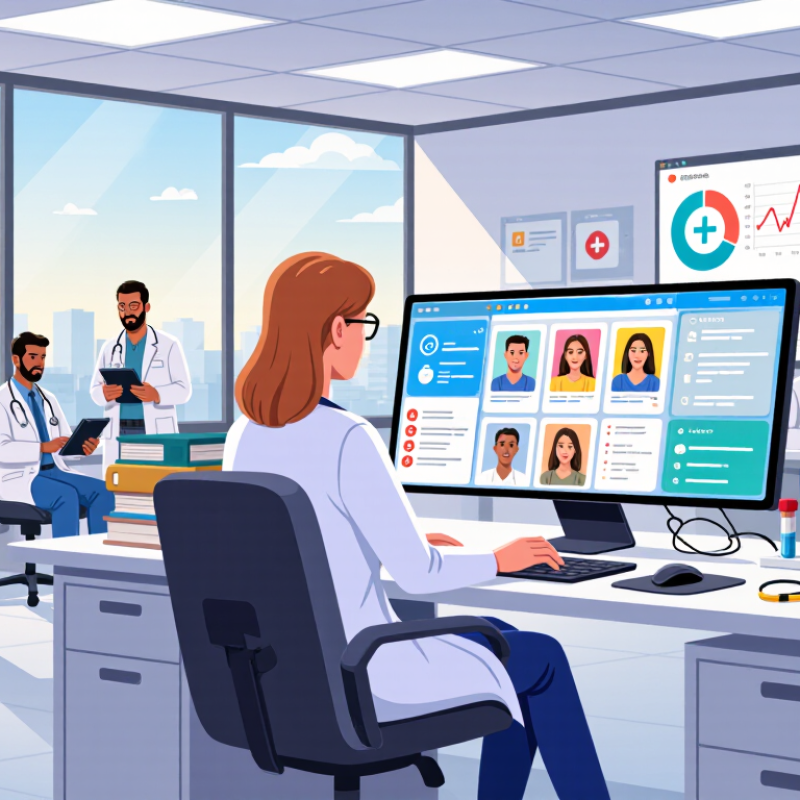
How does remote clinical trial monitoring work when investigators, participants, and study data are spread across different locations? This question matters because remote oversight must protect participants while preserving accurate, timely evidence. It is not simply a video call or dashboard.

Jennifer Goldsack, a recognized decentralized clinical trial expert, has stated, “Patient centricity must be operationalized, not merely discussed.” That principle shapes effective remote monitoring. Study teams may review electronic health records, wearable-device readings, electronic consent records, laboratory results, and source documents through secure systems. Site staff can upload essential files, while monitors examine trends and investigate unusual findings. The principal investigator remains responsible for medical decisions and participant safety.

A practical workflow usually begins with a risk assessment. Teams identify critical data, high-risk procedures, and sites needing closer attention. Automated alerts may flag missing visits or abnormal measurements. Human review is still necessary. Technology can miss context.

Strong programs also define access permissions, audit trails, backup procedures, and escalation timelines. Monitors should document each review clearly. They should speak with coordinators, not only inspect screens. A delayed upload may reflect a technical failure, a training gap, or a participant struggling at home.

The following five tips examine how does remote clinical trial monitoring work in daily practice. They focus on preparation, secure data flows, communication, risk-based review, and continuous improvement. The process is efficient when designed carefully, but it is never completely effortless. Remote oversight needs judgment, humility, and regular reflection.
How Does Remote Clinical Trial Monitoring Work 5 Best Tips?

What Remote Clinical Trial Monitoring Means

How Does Remote Clinical Trial Monitoring Work? 5 Best Tips

What Remote Clinical Trial Monitoring Means

Remote clinical trial monitoring means reviewing study progress without constant site visits. Trained monitors examine approved records, data trends, and communication logs from a secure location. They check whether study procedures match the protocol and whether participants receive proper attention. It is not simply watching a dashboard. It is a structured review of evidence, context, and risk.

The process usually starts with centralized data checks. A monitor may compare missing forms, delayed entries, consent documentation, and unusual result patterns. Video calls can clarify site questions. Secure document access supports deeper review when needed. Keep access limited. Protect participant privacy. Use clear records of every request and response.

Good practice depends on several habits. Define risk signals before data collection begins. Review high-risk sites more often. Ask focused questions instead of sending long messages. Confirm corrective actions with dates and owners. Recheck unusual data against source records when permitted. No dashboard is perfect. A delayed entry may reflect a technical problem, not misconduct. I would avoid judging too quickly. One weak assumption can distract the team from a serious issue. Experienced monitors combine analytics with respectful conversations, documented decisions, and regular review of what the process missed.

The Core Technologies Behind Remote Trial Oversight

Remote clinical trial monitoring relies on connected systems that let trained monitors review study activity without constant site visits. Electronic data capture platforms collect patient findings, visit dates, and query responses in near real time. Access controls limit each user to appropriate records. Every change leaves an audit trail.

Small details matter. A monitor may compare a laboratory result with the source document during a secure video call. Digital consent tools can show when information was presented and understood. Risk-based analytics then flag missing data, unusual visit patterns, or delayed safety reports. These alerts help teams focus attention where patient protection may need closer review.

Use reliable data connections. Confirm identity before every remote session. Keep recordings and documents encrypted. Test camera placement and audio quality before reviewing procedures. Human judgment remains essential. A dashboard can highlight an outlier, but it cannot explain a tired participant, a transcription mistake, or a local workflow problem. Remote oversight also depends on staff training, documented procedures, and clear escalation paths.

Not every site works equally well. Some clinics face weak internet, older equipment, or crowded rooms. That can reduce visibility. Monitors should record these limitations instead of pretending the process is perfect. Regular access reviews, system validation, and periodic on-site checks can expose weaknesses that software misses. Good oversight is partly technical, partly human.

How Remote Monitoring Is Conducted Step by Step

How Does Remote Clinical Trial Monitoring Work? 5 Best Tips

Remote clinical trial monitoring begins with a documented plan. The monitor reviews the protocol, site permissions, and risk indicators before accessing any records. Secure systems protect participant information during each session. A scheduled video call connects the monitor with site staff. They confirm recruitment activity, visit completion, and unresolved queries. Screen sharing may show trial records without downloading sensitive files.

The monitor then compares selected source data with the study database. This process checks consent dates, eligibility evidence, safety reports, and visit windows. Sampling should follow the study’s risk profile, not convenience. Missing signatures or unusual date patterns require prompt clarification. The monitor records findings in a formal report. Site staff receive clear actions, owners, and deadlines. Follow-up meetings confirm whether corrections are complete. Remote review is efficient, but it cannot replace every on-site observation. That limitation deserves honest attention.

Tips: Keep sessions focused. Send an agenda and document list before the call. Use role-based access and remove permissions after review. Ask staff to explain unusual records in their own words. Preserve an audit trail for every change. Train monitors to notice hesitation, not only visible errors. Short checks help.

A practical warning matters. Poor internet access can hide confusion or interrupt evidence review. Reschedule when the connection affects judgment. If repeated issues appear, increase oversight or consider an in-person assessment. Experienced monitors combine technology with clinical context, documented procedures, and careful questioning. Mistakes still occur, especially when teams assume that complete screens mean complete understanding.

Five Best Practices for Effective Remote Monitoring

How Does Remote Clinical Trial Monitoring Work? Five Best Practices for Effective Remote Monitoring

Remote clinical trial monitoring uses secure video calls, electronic records, and centralized data review. Monitors check consent documentation, source records, protocol compliance, and reported safety events without constant site visits. A quiet review room helps. Yet remote access is not flawless. A camera may miss a storage problem, while incomplete records can hide a process failure. Experienced teams combine remote checks with occasional on-site assessments when risk justifies them.

Tip one: Use a risk-based monitoring plan. Review high-risk participants, unusual data patterns, and delayed safety reports more closely.

Tip two: Protect participant privacy. Use approved systems, restricted permissions, and carefully controlled screen sharing.

Tip three: Verify source data consistently. Compare selected records with case report forms, laboratory results, and visit dates.

Tip four: Keep communication structured. Short weekly calls, clear action logs, and assigned deadlines reduce confusion.

Tip five: Document every decision. Record what was reviewed, what remains uncertain, and why follow-up is needed.

Small details matter. A missing signature, an unexplained date change, or repeated late entries may reveal training needs. Monitors should ask open questions instead of assuming misconduct. That approach supports reliable findings and respectful site relationships. Still, teams can over-monitor low-risk information and waste valuable time. Regularly reviewing the monitoring plan helps correct that imbalance. Clear escalation procedures also ensure serious concerns reach qualified investigators and oversight staff promptly.

Key Challenges and Compliance Considerations

How Does Remote Clinical Trial Monitoring Work 5 Best Tips?

Remote monitoring can improve oversight, but it also exposes difficult compliance gaps. Investigators may review electronic records, source documents, and safety reports without visiting the site. Yet access permissions must follow the minimum-necessary principle. Patient identity should remain protected through controlled systems, encryption, and documented user access. Audit trails matter. Every change needs a visible history.

Data quality is another challenge. Unstable internet, delayed uploads, and inconsistent source records can hide protocol deviations. The Tufts Center for the Study of Drug Development has reported that protocol amendments may add up to 40% to clinical trial costs. This makes early risk detection financially important, not merely administrative. Monitoring teams should compare enrollment, missing data, adverse events, and consent records through risk-based dashboards. Remote review should trigger targeted on-site checks when patterns look unusual.

Regulatory expectations are also evolving. U.S. Food and Drug Administration guidance on decentralized trial elements stresses investigator oversight, participant safety, and reliable data collection. The International Council for Harmonisation’s Good Clinical Practice principles require documented responsibilities, qualified staff, and traceable records. Teams should test backup procedures before an outage occurs. Errors remain possible. A practical weakness is overreliance on dashboards; clean metrics can still reflect incomplete source data. Independent review, staff training, and periodic access checks help expose that blind spot.

How Does Remote Clinical Trial Monitoring Work 5 Best Tips? - Key Challenges and Compliance Considerations

Monitoring Area How Remote Monitoring Works Useful Data Dimensions Key Challenge Compliance Considerations
1. Risk-Based Planning The sponsor identifies critical data, critical processes, and higher-risk sites before selecting remote review activities and monitoring intensity. Protocol complexity, investigational product risk, enrollment activity, data-error history, safety-event volume, and site experience. Incomplete risk assessments may cause excessive review of low-risk data while missing important safety or integrity signals. Document the monitoring rationale in the monitoring plan and align it with ICH E6 risk-based quality management principles.
2. Secure Data Access Authorized monitors review electronic source data, electronic case report forms, safety information, and essential documents through controlled systems or secure virtual access. User access status, login history, document availability, query aging, source-data review status, and system audit-trail events. Sites may use incompatible systems, restrict remote access, or expose confidential information through insecure file sharing. Use role-based access, multifactor authentication where appropriate, encryption, access logs, validated systems, and documented permission reviews.
3. Centralized Data Review Central teams compare data across sites to detect trends, outliers, missing values, protocol deviations, delayed reporting, and inconsistent results. Missing-data rate, query rate, query resolution time, protocol-deviation count, safety-reporting timeliness, and cross-site outliers. Automated alerts can create excessive false positives, and statistical signals may require clinical interpretation. Predefine review rules, retain documented assessments, protect blinded information, and ensure that data changes remain traceable.
4. Remote Site Communication Monitors conduct scheduled video meetings, secure correspondence, training sessions, and follow-up reviews with investigators and site staff. Open action items, response time, training completion, meeting frequency, unresolved findings, and escalation status. Time-zone differences, unstable connectivity, staff turnover, and limited visibility into site procedures can delay issue resolution. Maintain monitoring reports, communication records, action owners, due dates, and escalation decisions in the trial master file or approved repository.
5. Safety Oversight Safety data from sites, electronic patient-reported outcomes, laboratories, telehealth visits, and other sources are reviewed for timely identification and follow-up of adverse events. Adverse-event reporting timeliness, serious adverse-event reconciliation, follow-up completion, laboratory-alert status, and medical-review outcomes. Remote review may not provide a complete view of local clinical context or urgent patient-care needs. Define safety-escalation procedures, investigator responsibilities, reporting timelines, and emergency communication channels in advance.
6. Essential Document Review Monitors review approved protocols, consent materials, delegation logs, training records, ethics approvals, and other essential documents in an electronic repository. Document completeness, expiration dates, version control, approval status, signature status, and overdue-document count. Documents may be outdated, incorrectly filed, unavailable for remote review, or stored in multiple locations. Apply document version control, audit trails, electronic-signature controls, retention rules, and access restrictions consistent with applicable requirements.
7. Issue Management Findings are recorded, assigned to responsible personnel, prioritized by risk, tracked to resolution, and verified through documented follow-up. Issue severity, age, recurrence, corrective-action status, root-cause category, and time to closure. Repeated findings may indicate ineffective corrective and preventive actions or insufficient site training. Use contemporaneous records, clear ownership, evidence-based closure criteria, and escalation for unresolved critical issues.

Five Best Practices for Effective Remote Clinical Trial Monitoring

Tip Recommended Practice Implementation Measure Compliance Benefit
1 Create a documented risk-based monitoring plan. Define critical data, thresholds, review frequency, escalation paths, and conditions requiring on-site or enhanced review. Supports proportionate oversight and demonstrates that monitoring decisions are based on participant safety and data reliability.
2 Standardize secure access and privacy safeguards. Use approved systems, least-privilege access, authentication controls, encryption, and periodic access reviews. Reduces unauthorized disclosure risk and supports privacy, security, and electronic-record expectations.
3 Combine centralized analytics with human review. Use validated reports and predefined thresholds, followed by documented clinical or operational assessment of signals. Improves consistency while preventing automated outputs from replacing qualified oversight.
4 Keep remote monitoring records inspection-ready. File monitoring reports, decisions, communications, findings, corrective actions, and supporting evidence promptly. Creates a clear audit trail and supports reconstruction of trial conduct.
5 Plan for technology and access failures. Define backup communication methods, downtime procedures, alternative document-transfer methods, and criteria for an on-site visit. Maintains continuity of oversight and reduces the risk that technical barriers compromise participant protection or data integrity.
Reference framework: Remote monitoring should be adapted to the protocol, investigational product, participant population, site capabilities, and applicable requirements, including ICH E6 Good Clinical Practice principles, applicable national regulations, privacy laws, electronic-record controls, and ethics committee requirements.

FAQS

What is remote clinical trial monitoring?

It is the review of study activities through secure digital systems and scheduled remote sessions. Monitors examine records without constant site visits. Human judgment remains essential.

What information can monitors review remotely?

They may review consent dates, visit completion, source records, laboratory results, and safety reports. Screen sharing can display records without downloading sensitive files. Visibility is not always complete.

How does a remote monitoring session usually begin?

The monitor reviews the study plan, site permissions, and current risk indicators. Staff confirm their identities before accessing records. A scheduled video call then connects both sides.

How are participant privacy and data security protected?

Secure connections, encrypted files, and role-based permissions help protect participant information. Access should be removed after the review ends. Every change needs an audit trail.

How do monitors identify unusual study activity?

Risk-based tools can flag missing data, delayed safety reports, and unusual visit patterns. Monitors compare selected records with source documents. An alert needs explanation, not automatic judgment.

What details should monitors check carefully?

They should examine missing signatures, changed dates, eligibility evidence, and repeated late entries. A laboratory result may need comparison during a secure video session. Small details can reveal training gaps.

What problems can weaken remote monitoring?

Weak internet, old equipment, and crowded rooms can reduce visibility. Poor audio may hide uncertainty during a discussion. Rescheduling may be wiser when the connection affects judgment.

Can remote monitoring replace on-site assessments?

Not completely. A camera may miss storage problems or workflow confusion. Periodic on-site checks can expose weaknesses that software overlooks. That limitation deserves honest attention.

How should teams organize follow-up actions?

The monitor records findings in a formal report. Each action should have an owner, deadline, and clear description. Follow-up meetings confirm whether corrections are complete.

What makes remote oversight more reliable?

Teams need trained monitors, documented procedures, regular access reviews, and clear escalation paths. Short weekly calls can reduce confusion. Still, complete screens do not guarantee complete understanding.

Conclusion

Remote clinical trial monitoring is a structured approach to overseeing research activities without requiring monitors to visit every site in person. To understand how does remote clinical trial monitoring work, consider the combination of secure data systems, video communication, electronic records, risk-based analytics, and centralized review. These tools help study teams examine enrollment progress, data quality, protocol adherence, safety reports, and site performance from a distance while maintaining regular communication with investigators and coordinators.

Effective remote monitoring begins with a clear oversight plan, defined responsibilities, reliable data access, and consistent documentation. The best practices include prioritizing sites and data according to risk, scheduling routine virtual check-ins, training site personnel, confirming source information carefully, and escalating issues promptly. However, remote oversight must also address privacy, cybersecurity, consent, record accuracy, technology limitations, and differing local requirements. When supported by strong procedures and appropriate human judgment, it can improve efficiency, identify problems earlier, and strengthen the overall quality and continuity of clinical trial supervision.

Aria

Aria

Aria is a dedicated marketing professional with a deep passion for innovative strategies and a keen understanding of our company's product offerings. With a wealth of experience in the industry, Aria excels at crafting engaging content that highlights the unique features and benefits of our......