How to Manage the Future of Remote Clinical Trials in 2026?

Time:2026-09-26 Author:Charlotte
0%

By 2026, remote clinical trials will move beyond video visits and mailed study kits. They will become coordinated care systems. The central question is: what is the future of remote clinical trial management?

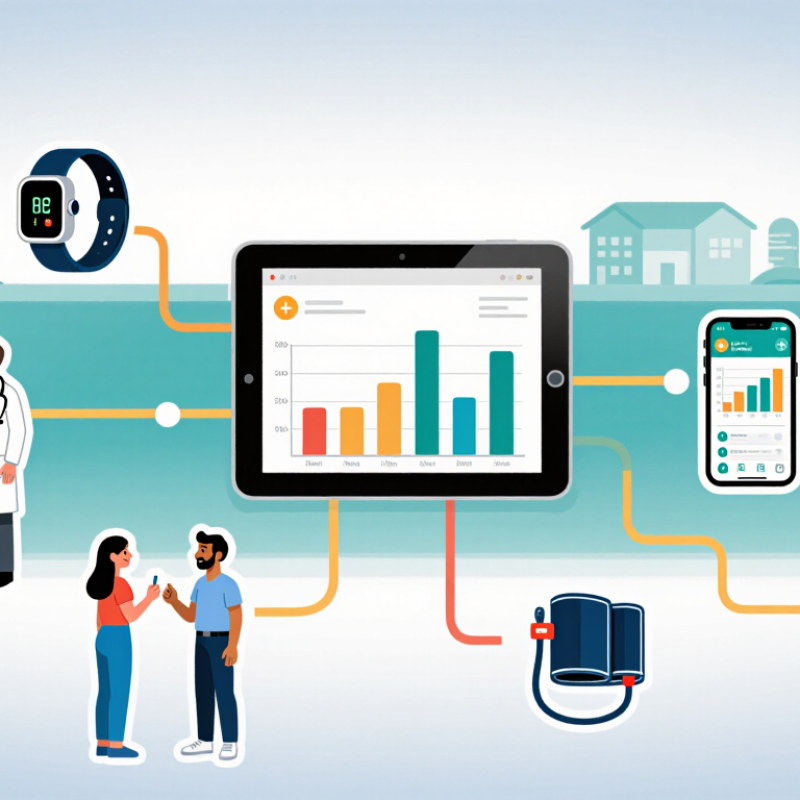
Jennifer Goldsack, founder and CEO of the Digital Medicine Society, has stated, “Clinical research should be designed around the participant, not the study site.” That principle will guide stronger remote models. Participants may use wearable sensors, smartphone diaries, home blood-pressure devices, and local laboratory services. Data will arrive continuously, not only during scheduled appointments. Trial teams will need practical systems for checking device quality, identifying missing measurements, and responding to safety signals quickly.

Trust will matter more than technology. A participant may forget to charge a sensor. A rural clinic may lose internet access. A caregiver may need clearer instructions. These small moments can affect data quality and retention. Experienced managers will therefore combine automation with human support. Nurses, coordinators, and investigators must remain visible and reachable.

Remote does not mean effortless. That assumption needs challenging. Some protocols may still require in-person examinations or specialized imaging. Others may exclude people with limited digital access unless sponsors provide training, devices, or alternatives. Reliable management in 2026 will depend on transparent consent, documented workflows, validated platforms, and measurable participant feedback. The strongest teams will monitor both endpoints and experience. They will improve after failure, rather than pretending every remote process works perfectly.
How to Manage the Future of Remote Clinical Trials in 2026?

Defining the Future Scope of Remote Clinical Trials in 2026

In 2026, remote clinical trials are moving beyond video calls and electronic consent. Their scope now includes hybrid visits, home nursing, local laboratory testing, and data collected through connected devices. A participant might complete a symptom check on a phone, then provide a blood sample at a nearby clinic. The aim is not to move every task home. It is to place each task where it is safest and most practical.

Good trial design starts with the study question. Wearable data can show changes between appointments, while remote check-ins may help teams notice new symptoms sooner. But more data does not always mean better evidence. Devices need clear instructions, reliable measurement, and a plan for responding to concerning results. Teams also need to explain who reviews incoming information and when participants should expect a reply. Small gaps can matter.

Access remains uneven. Some participants lack steady internet, private space, or confidence using digital tools. Offering phone-based options, printed instructions, and in-person support can reduce those barriers. Not every visit. Certain assessments still need a clinic, and researchers should say so plainly. A fully remote design may look efficient on paper, yet leave people behind. That deserves a harder look as trial methods evolve.

Assessing Technologies and Data Systems for Remote Trial Management

How to Manage the Future of Remote Clinical Trials in 2026?

Remote trial management depends on more than video visits and wearable devices. Teams need data systems that can receive readings, connect them to participant records, and flag missing information. A blood pressure reading from a home monitor may arrive hours late. The system should show when it was captured, not just when it was uploaded. Clear audit trails and role-based access help staff review changes and protect sensitive records. Interoperability matters, but it can be harder to achieve than a vendor demo suggests.

Tips: Test the full data journey before enrollment. Check offline syncing, timestamps, alerts, and staff permissions. Keep a fallback. A phone call may resolve a missed check-in faster than another automated reminder.

Technology should reduce participant burden, not simply move clinic tasks onto a screen. Short instructions, accessible forms, and loaned devices can help people with limited connectivity or digital confidence. Teams should also define who reviews unusual readings and how quickly participants receive follow-up. Small gaps matter. In one workflow, a delayed alert may sit unnoticed if responsibility is unclear. Review data quality regularly, document decisions, and ask participants what feels confusing. Even a well-designed system will need adjustment once real people use it.

Building Patient-Centered Recruitment, Consent, and Participation Models

By 2026, remote trial recruitment should start where patients already seek care: local clinics, community groups, and accessible health services. Online adverts alone can miss people with limited internet access, low digital confidence, or little time to spare. The FDA’s 2023 Drug Trials Snapshots show that, across trials supporting novel drug approvals, about 8% of participants were Black and 6% were Asian. These figures are a reminder that convenient technology does not automatically create representative recruitment. Small details matter: offer phone and paper options, translate materials, and schedule calls beyond standard work hours.

Consent should feel like a conversation, not a screen to clear. Use plain language, explain what remote visits involve, and ask participants to describe the key choice in their own words. That gap matters. A video call may be easier for one person and stressful for another. Let participants choose between home visits, local appointments, and secure remote check-ins when the protocol allows. Share practical details early, including device needs, expected time, and who to contact when technology fails. Researchers should also be honest about uncertainty: remote participation can reduce travel, but it may not reduce every burden. We still need better evidence on which combinations of digital and in-person support work best for different communities.

Managing Regulatory, Ethical, Privacy, and Operational Requirements

By 2026, remote clinical trials will need more than video visits and home-delivered study materials. Teams should map each activity to applicable local requirements, the approved protocol, and documented staff responsibilities. A consent process might include a private video call, accessible written materials, and a clear way to ask questions later. Plain language matters. Participants should understand what data are collected, who can access them, and how to report a concern.

Privacy protections work best when built into daily tasks. Collect only necessary information, restrict access by role, and review how data move between devices and study systems. Explain practical risks, such as a shared family tablet displaying a study notification. Ethical planning also means checking who may be left out when internet access, language, disability, or digital confidence varies. Offer suitable alternatives where the protocol permits them. Not every participant wants another app.

Operations need equally concrete planning. Define who responds when a home device fails, a shipment arrives late, or a participant reports a symptom after hours. Record training, deviations, and follow-up consistently, then check whether procedures work in practice. A checklist can help, but it cannot replace judgment. Teams may discover that a workflow looks efficient on paper and feels confusing at someone’s kitchen table. Review participant feedback and quality signals throughout the trial, and revise processes through appropriate oversight.

How to Manage the Future of Remote Clinical Trials in 2026? - Managing Regulatory, Ethical, Privacy, and Operational Requirements

Area Requirement or consideration Practical control for 2026 Evidence to maintain Reference framework
Trial design and oversight Decentralized elements should be appropriate to the investigational product, population, endpoints, and safety profile. Trial responsibilities remain subject to applicable requirements even when activities occur at home or through service providers. Document which visits and procedures are remote, hybrid, or site-based; assess risks and define investigator oversight, escalation routes, and contingency plans before enrollment. Protocol and risk assessment; delegation and oversight records; vendor agreements; monitoring and issue-escalation plans. FDA guidance on Decentralized Clinical Trials (2023); ICH E6(R3) Good Clinical Practice (finalized 2025).
Regulatory and ethics review Required ethics committee or institutional review board review, informed consent, and regulatory submissions still apply. Requirements vary by jurisdiction and study design. Confirm local rules for each participant location, including remote procedures, recruitment, home-health services, and cross-border data transfers; obtain required approvals before implementing changes. Approval letters; submitted protocol and consent versions; jurisdictional assessments; amendment and notification logs. Applicable national regulations; FDA requirements where applicable; EU Clinical Trials Regulation (EU) No 536/2014 for covered EU trials.
Informed consent Consent must support participant understanding and be obtained and documented in an approved manner. Electronic consent does not remove requirements for clear information, voluntariness, and appropriate documentation. Use accessible, plain-language materials; provide a route for questions and a non-digital alternative where feasible; verify identity and consent completion according to approved procedures. Approved consent materials; dated consent records and audit trails; accessibility and comprehension procedures; records of re-consent when required. FDA Use of Electronic Informed Consent (2016); applicable ethics and clinical-trial rules.
Privacy and data protection Health-data obligations depend on location, parties, and data flows. HIPAA applies to covered entities and business associates in its scope; GDPR applies where its territorial and material scope is met. Research participation consent and a privacy-law basis for processing are distinct issues. Map data flows and roles; collect only necessary data; set retention and access controls; assess vendors, international transfers, and applicable privacy impact assessment duties. Data-flow map; processing agreements; access logs; retention schedule; security and privacy risk assessments; incident-response records. GDPR (EU) 2016/679 where applicable; HIPAA Privacy and Security Rules where applicable; relevant local privacy laws.
Electronic records and systems Electronic trial records and computerized systems should be fit for purpose, reliable, secure, and capable of supporting data integrity and inspection. Specific requirements depend on the applicable regulatory framework. Qualify systems for intended use; control user access and changes; maintain validated audit trails, backups, incident handling, and documented vendor oversight. Validation or qualification records; system access lists; audit-trail reviews; change-control logs; backup and recovery test results. ICH E6(R3); FDA 21 CFR Part 11 when applicable; applicable electronic-record requirements in other jurisdictions.
Safety and medical escalation Remote contact must not delay assessment or reporting of adverse events, serious adverse events, or urgent clinical concerns under applicable protocol and regulatory timelines. Give participants clear emergency instructions and staffed contact routes; define who reviews alerts, documents events, contacts investigators, and arranges in-person evaluation. Safety procedures; contact and escalation logs; event assessments and reports; evidence of staff training and coverage. Protocol; applicable adverse-event reporting regulations; ICH E6(R3).
Devices and home procedures Home measurements and connected devices can introduce usability, calibration, connectivity, and data-quality risks. Device-related regulatory obligations depend on intended use and jurisdiction. Select equipment suitable for the study; test participant workflows; provide instructions and support; define acceptable measurement conditions and procedures for missing or implausible readings. Equipment specifications; calibration and maintenance records; training logs; data-quality checks; troubleshooting and replacement records. Protocol and applicable medical-device rules; FDA decentralized-trial guidance where relevant.
Equity and accessibility Digital participation may create barriers related to connectivity, disability, language, digital literacy, or access to private space. Remote methods should not exclude eligible participants without a scientific or safety justification. Offer reasonable alternatives such as telephone support, translated materials, accessible interfaces, loaned equipment, or site visits when feasible and consistent with the protocol. Accessibility review; participant support records; documented alternatives; enrollment and retention metrics assessed for potential access barriers. Ethics review requirements; applicable disability and language-access laws; protocol-specific inclusion plans.
Operational readiness Distributed teams and external providers require clear responsibilities, consistent procedures, and reliable communication across sites and participant locations. Train investigators, coordinators, and service providers; maintain continuity plans for outages, delayed shipments, staff coverage, and participant withdrawal or loss of connectivity. Training records; standard operating procedures; service-level and responsibility documents; outage logs; continuity and corrective-action records. ICH E6(R3); protocol; applicable good clinical practice and local operational requirements.

Note: Requirements depend on the trial, participant location, data flows, and applicable law. Confirm current local requirements with qualified regulatory, ethics, privacy, and clinical professionals before implementation.

Measuring Trial Performance and Adapting Strategies for Long-Term Success

Remote clinical trials should be managed through measurable outcomes, not technology adoption alone. Track enrollment pace, missed visits, data completeness, participant retention, and the time required to resolve queries. A dashboard can reveal a practical problem: repeated evening check-ins may suit participants, while still overwhelming a small site team. Small signals matter.

Tufts CSDD’s 2013 site-performance analysis found that 11% of research sites enrolled no participants, while 37% enrolled fewer than planned. This is a historical, site-level benchmark, not proof that remote methods improve recruitment. In 2026, compare each trial with its own baseline: time from screening to enrollment, dropout reasons, and completion rates for remote versus in-person visits. Keep the comparison fair. Participant needs and study designs differ.

The FDA’s 2024 guidance on decentralized clinical trials calls for procedures suited to each study and appropriate oversight of remote activities. Use that principle when reviewing performance monthly: check whether home measurements arrive on time, whether devices produce usable readings, and whether participants can reach study staff. A green dashboard can still hide a tired participant. I would also question metrics that reward speed but ignore burden. Adjust visit frequency, support hours, or device instructions when evidence points to friction, then document what changed and whether it helped.

FAQS

What does a remote clinical trial include in 2026?

It may combine video visits, home nursing, local lab tests, and connected devices. Some visits still belong in clinics.

Do all study tasks need to happen at home?

No. A participant might record symptoms by phone, then provide a blood sample at a nearby clinic. Safety comes first.

How can wearable data help researchers?

It can show changes between scheduled appointments and prompt earlier check-ins. More data does not always mean better evidence.

What should teams test before enrollment?

Test timestamps, offline syncing, alerts, permissions, and missing-data workflows. Keep a fallback. A phone call may work faster.

How can trials support participants with limited digital access?

Offer phone check-ins, printed instructions, loaned devices, and in-person help where permitted. Not everyone wants another app.

What privacy risks should participants understand?

Explain what information is collected, who can access it, and how it moves between systems. A shared tablet may display a study notification.

Who should respond to unusual readings or reported symptoms?

Assign a responsible staff role and response window before the trial starts. An alert without an owner can sit unnoticed.

How should teams improve a remote trial workflow?

Review data quality, document decisions, and ask participants what feels confusing. A polished plan can still fail at someone’s kitchen table.

Conclusion

The future of remote clinical trials in 2026 will depend on combining suitable digital technologies with reliable data systems and thoughtful study design. Trial teams should assess tools for remote visits, data collection, and communication based on their accuracy, usability, security, and fit with each study’s goals. Patient-centered recruitment and clear consent processes can help participants understand what to expect, while flexible ways to take part may reduce practical barriers and support continued engagement.

To manage remote trials effectively, teams need to address regulatory, ethical, privacy, and operational requirements throughout the study. This includes protecting sensitive information, providing appropriate support, and maintaining consistent oversight across remote activities. Regularly measuring recruitment, retention, data quality, participant experience, and operational performance can reveal where adjustments are needed. In considering what is the future of remote clinical trial management, the key is to adapt responsibly: use evidence from ongoing performance to improve trial processes while keeping participant needs and scientific reliability at the center.

Charlotte

Charlotte

Charlotte is a seasoned marketing professional with a deep understanding of the company's portfolio and a passion for elevating its presence in the market. With a keen eye for detail and a commitment to excellence, she ensures that our professional blog is regularly updated with insightful articles......