Clinical research is moving beyond hospital walls. In 2026, remote monitoring helps research teams observe participants in familiar settings, including homes, workplaces, and local communities. Wearable sensors can capture heart rate, sleep patterns, movement, and other study-specific signals. Telehealth visits can reduce travel, waiting rooms, and missed appointments.
So, how does remote monitoring improve clinical research? It can strengthen participant access, increase data frequency, and reveal changes between scheduled clinic visits. A patient recovering at home may report symptoms through a smartphone while a connected device records daily activity. Investigators can review these trends earlier and respond when results appear unusual. Jennifer Goldsack, founder and CEO of the Digital Medicine Society, has emphasized, “We need to meet people where they are.” That principle supports more patient-centered trial design.
However, remote monitoring is not automatically better. Devices may lose connectivity. Participants may forget to wear them. Algorithms can misread ordinary behavior, especially across different ages, cultures, or health conditions. Research teams must validate devices, protect personal data, explain procedures clearly, and maintain human oversight. The technology needs discipline.
Real experience matters. A smoother dashboard does not guarantee reliable evidence. Strong studies combine remote measurements with clinical judgment, transparent protocols, participant feedback, and careful quality checks. They also ask a difficult question: are we collecting useful information, or simply collecting more? When designed responsibly, remote monitoring can make clinical research more accessible, responsive, and reflective of real life. Its value depends on trust.
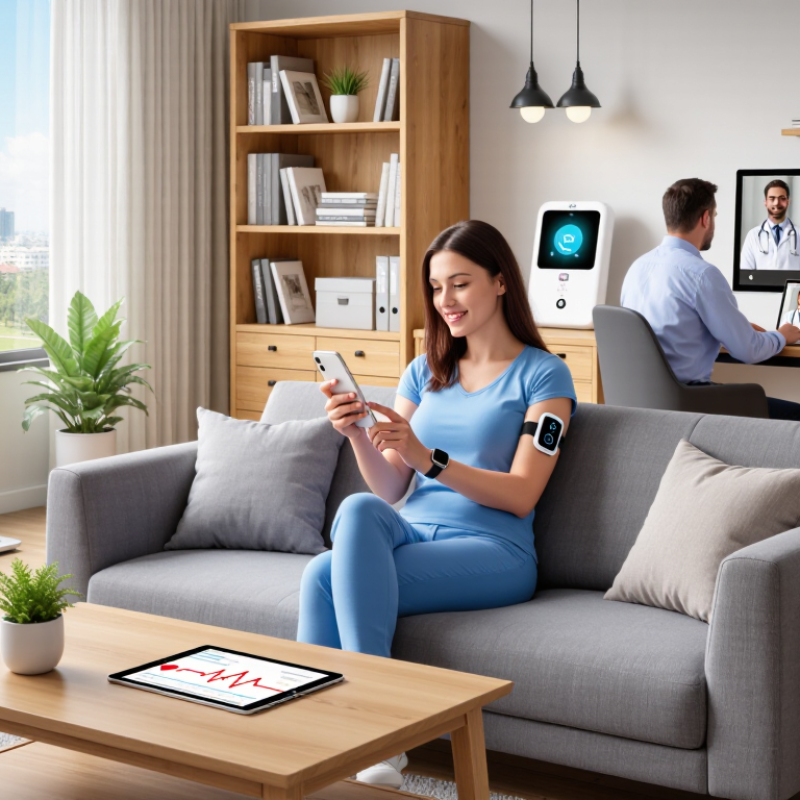
Remote monitoring means reviewing clinical trial activities without requiring constant on-site visits. In 2026, trained monitors can examine source records, consent documentation, and safety reports through secure systems. They compare submitted data with the study protocol and identify unusual patterns early. A missing laboratory result may reveal a workflow problem, not simple carelessness.
This approach can reduce travel and shorten the time between data collection and review. Investigators receive clearer questions while participant visits remain focused on care and study procedures.
Remote communication also helps monitoring teams support sites in rural or underserved areas. However, access should follow role-based permissions, audit trails, and strict privacy controls. Reliable oversight depends on accurate records and stable connectivity.
Remote monitoring is not flawless. A video call cannot replace every physical observation. Some documentation looks complete until a local context explains its weakness. Experienced monitors therefore combine remote review with targeted visits, direct conversations, and risk-based judgment.
Teams should record decisions carefully, including unresolved concerns and reasons for accepting limited evidence. That honesty improves credibility, even when the process feels slower.
Small errors still matter. A quiet dashboard may hide a participant’s delayed report or a site’s growing workload. Continuous training and human review remain essential.
How Does Remote Monitoring Improve Clinical Research 2026?
How Remote Monitoring Supports Decentralized Study Activities
Remote monitoring makes decentralized studies more practical for participants and research teams. It connects home measurements, telehealth visits, electronic diaries, and local laboratory services. The 2024 FDA guidance on decentralized clinical trials recognizes these tools as important methods for reducing travel and supporting study participation. A 2024 analysis of ClinicalTrials.gov records reported that more than 1,000 studies used at least one decentralized feature. Remote oversight is becoming operational, not experimental.
A participant can complete a blood-pressure check before breakfast, answer a symptom questionnaire, and speak with a coordinator from home. Meanwhile, clinical teams can review missing readings, identify unusual patterns, and contact participants earlier. The 2023 World Health Organization report on digital health emphasizes that reliable data systems require interoperability, privacy protection, and trained users. Remote monitoring supports these requirements when devices are validated and data flows are documented.
The model is not flawless. A missed upload may reflect poor connectivity, fatigue, or confusion rather than clinical deterioration. Overreacting to every alert can burden participants and investigators. I would combine automated checks with human review, especially for safety signals. Site teams still need clear escalation procedures, device training, and backup contact methods. These details often determine whether a decentralized study feels genuinely accessible or merely shifts technical work into a participant’s home.
How Does Remote Monitoring Improve Clinical Research 2026?
Remote data collection can reduce unnecessary site visits and shorten the time between participant action and investigator review. Participants may report symptoms through secure digital forms from home, work, or a local clinic. Connected devices can capture blood pressure, temperature, or movement at scheduled intervals. Time-stamped records give research teams a clearer view of changing health patterns. That improves workflow.
Access can widen beyond major research centers. A participant living far from a hospital may join without repeated long-distance travel. Caregivers, older adults, and people with limited mobility may find participation more manageable. However, convenience is not automatic. Internet access, device skills, language, and fatigue still shape the experience. Some gaps remain. Study teams should offer clear instructions, technical support, and non-digital options when appropriate.
Reliable remote monitoring requires more than collecting large volumes of data. Investigators need validated procedures, staff training, privacy safeguards, and regular checks for missing or unusual readings. A device may fail during a busy morning. A participant may misunderstand a question. These events need documented review, not silent correction. Remote methods can improve trial efficiency, yet they may also introduce new sources of bias. Researchers should compare remote and in-person findings, listen to participant feedback, and adjust protocols when the evidence shows friction.
Remote data collection can reduce travel barriers, broaden recruitment access, and support more frequent, real-world measurements during clinical trials.
Internet access is a practical foundation for remote monitoring. In 2023, approximately 67% of the global population was online, compared with 93% in high-income economies and 27% in low-income economies. These figures show both the opportunity and the need for hybrid approaches, such as connected devices, telephone follow-up, local care partners, and assisted digital services, to improve inclusion without excluding participants with limited connectivity.
Source: International Telecommunication Union, Facts and Figures 2023. Remote-monitoring implications are aligned with FDA guidance on decentralized clinical trials and remote data collection.
Continuous remote monitoring strengthens clinical research by capturing changes between scheduled visits. Connected sensors can record temperature, heart rate, oxygen levels, sleep, and medication patterns in real time. This creates a fuller picture of each participant’s condition. It also reduces reliance on memory and paper diaries.
Earlier alerts may help research teams identify safety signals before they become serious. Still, more data does not automatically mean better data.
Data quality depends on device calibration, participant training, and stable internet access. The U.S. Food and Drug Administration recommends that digital health technologies be fit for purpose, validated, and assessed for data integrity.
Research teams should review missing readings, unusual values, and delayed uploads every day. A sudden oxygen decline at home may deserve clinical review, not an automatic exclusion.
Human judgment remains necessary. We sometimes overtrust dashboards.
Tips: Use validated devices, define alert thresholds in advance, and document every technical interruption. Give participants simple instructions and a direct support channel. Check whether monitoring increases anxiety or becomes burdensome. The best protocol is not the one collecting everything. It is the one producing reliable evidence while protecting participant safety.
Remote monitoring can reduce travel, but it does not remove clinical research complexity. The FDA’s 2024 guidance on decentralized clinical trials stresses investigator oversight, data integrity, privacy, and participant safety. Each home visit creates practical questions: Is the device calibrated? Did the participant follow instructions? Who responds when a symptom appears at 2 a.m.? Connectivity still fails. The International Telecommunication Union reported 2.6 billion people remained offline in 2023. Rural participants may therefore face more exclusion, not more convenience.
Data quality is another difficult edge. Different phones, sensors, and local networks can produce uneven readings. A blood-pressure value recorded beside a noisy kitchen is not equivalent to one collected under controlled conditions. Researchers need validated devices, timestamped records, clear escalation pathways, and trained local support. The 2024 FDA guidance also warns that remote methods must fit the protocol, rather than being added for appearance. That distinction matters.
Privacy creates a quieter risk. Remote monitoring moves sensitive information through homes, cloud systems, and shared devices. Consent forms may be technically complete but practically unclear. My field experience suggests that participants often accept monitoring until alerts interrupt work or family routines. Retention then weakens. The overlooked challenge is human fatigue. More data can create less attention. Research teams should test burden, connectivity, and response times before scaling, while admitting that “remote” is not automatically simpler.
| Research Dimension | How Remote Monitoring Improves Research | Typical 2026 Operational Measure | Challenge Shaping Adoption | Recommended Control |
|---|---|---|---|---|
| Participant Access | Reduces the need for frequent site visits by enabling electronic questionnaires, video visits, connected devices, and home-based assessments. | More study activities completed from home; visit frequency depends on protocol risk and endpoint requirements. | Digital exclusion, limited broadband access, language barriers, and participant preference for in-person care. | Offer loaner devices, telephone alternatives, translated materials, accessibility support, and optional in-person visits. |
| Data Collection Frequency | Captures patient-reported outcomes and physiological measures between scheduled visits, improving visibility into day-to-day changes. | Data may be collected daily, weekly, or continuously, depending on the endpoint and device capability. | Participant fatigue, missed measurements, device non-use, and excessive alerts can reduce data completeness. | Use short assessments, participant reminders, adherence dashboards, and predefined alert thresholds. |
| Data Timeliness | Moves monitoring from periodic review toward risk-based review of incoming safety, quality, and adherence signals. | Potential visibility within minutes to hours for connected data, compared with weeks or months for some traditional review cycles. | Poor connectivity, delayed data synchronization, duplicate records, and unclear escalation ownership. | Define data latency targets, reconciliation rules, escalation timeframes, and backup procedures. |
| Participant Retention | Lowers travel time and logistical burden, which can make participation more practical for people with work, mobility, or caregiving constraints. | Retention benefit is greatest when remote activities replace unnecessary visits rather than add extra tasks. | Technology burden, privacy concerns, reimbursement delays, and insufficient technical support may increase withdrawal risk. | Conduct usability testing, provide rapid support, reimburse connectivity costs where appropriate, and monitor reasons for discontinuation. |
| Protocol Compliance | Automated reminders and timestamped records make missed activities and deviations easier to identify and address. | Compliance can be reviewed by participant, site, visit window, assessment, and device status. | Automated reminders do not resolve unclear instructions, burdensome schedules, or participant misunderstandings. | Use clear visit windows, role-based dashboards, retraining triggers, and documented deviation-management procedures. |
| Safety Surveillance | Supports earlier review of symptoms, vital signs, and patient-reported events when thresholds are clinically validated. | Safety signals can be routed according to predefined severity, urgency, and clinical responsibility. | False-positive alerts, missed signals, unclear clinical accountability, and confusion between research monitoring and clinical care. | Validate algorithms and thresholds, document response pathways, and clearly explain emergency procedures to participants. |
| Population Diversity | Makes participation possible outside major research centers and can improve geographic reach for decentralized activities. | Enrollment reach may expand beyond the usual travel radius of participating sites. | Unequal device ownership, digital literacy differences, rural connectivity gaps, and cultural or language differences. | Assess digital access during screening and provide equivalent non-digital pathways where scientifically appropriate. |
| Site Workload | Automates reminders, data review queues, and basic completeness checks, allowing site teams to focus on clinically meaningful issues. | Workload shifts from routine visit administration toward exception management and participant support. | Poor workflow integration can create duplicate data entry, alert overload, and additional reconciliation work. | Map workflows before deployment, limit unnecessary alerts, and integrate validated data flows with study systems. |
| Data Quality | Time-stamped, structured, and remotely captured data can reduce recall bias and improve traceability when appropriately validated. | Quality is assessed through completeness, plausibility, range checks, timestamp accuracy, and source-data verification. | Device calibration, algorithm changes, missing context, sensor misuse, and inconsistent measurement conditions. | Maintain validation evidence, calibration records, version control, training logs, and documented data-cleaning rules. |
| Privacy, Security, and Governance | Creates a structured way to collect and review health data outside the traditional research site. | Governance requires documented consent, access controls, audit trails, retention rules, and incident-response procedures. | Cross-border data transfers, cybersecurity threats, secondary data use, and uncertainty about data ownership or responsibility. | Apply data minimization, encryption, role-based access, security testing, vendor oversight, and jurisdiction-specific privacy reviews. |
Note: Operational measures are planning benchmarks and should be adapted to the study design, endpoint risk, population, device characteristics, applicable regulations, and validated clinical workflows.
Remote monitoring reviews trial activities through secure systems instead of constant site visits. Monitors examine records, consent forms, and safety reports. It saves travel time. Human judgment remains necessary.
It connects home measurements, telehealth visits, electronic diaries, and local laboratory services. A participant might check blood pressure before breakfast. The team can review results from a distance. Connectivity problems still happen.
Digital forms and connected devices shorten the time between participant actions and investigator review. Time-stamped records show changing health patterns. Teams can identify missing readings sooner. Faster does not always mean better.
It may help people living far from hospitals, caregivers, older adults, and participants with limited mobility. Fewer long trips can reduce practical burdens. Access is not automatic. Internet skills and language still matter.
Participants may record blood pressure, temperature, movement, symptoms, or daily experiences. They might complete a questionnaire from home or a local clinic. Small details matter. A missed upload needs explanation.
Access should follow role-based permissions, audit trails, and strict privacy controls. Teams must document how data moves between devices and systems. Secure handling protects participant information. Weak controls create serious concerns.
No. A video call cannot show every physical detail or explain every local problem. Targeted visits and direct conversations may still be needed. Remote review works best as part of a mixed approach.
Poor connectivity, device failure, fatigue, and confusing instructions can produce unusual readings. An alert may reflect technical trouble, not clinical deterioration. Overreacting can burden participants. Quiet dashboards can hide growing workloads.
They should investigate missing results, document decisions, and follow clear escalation procedures. Technical support and backup contact methods can help. Limited evidence should not be silently corrected. I would question accepted gaps more often.
Remote monitoring is reshaping clinical research by allowing study teams to collect information, communicate with participants, and oversee trial activities beyond traditional research sites. How does remote monitoring improve clinical research? It expands access for people who live far from study centers, supports decentralized activities such as virtual visits and home-based assessments, and reduces the time and travel required for participation. Remote data collection can also streamline study workflows, improve recruitment and retention, and help researchers identify trends more quickly.
Continuous monitoring strengthens data quality and patient safety by enabling timely review of participant-reported outcomes, wearable-device information, and other digital measurements. However, successful implementation in 2026 will depend on addressing challenges such as data privacy, technology access, participant training, system reliability, and consistent procedures across different locations. With thoughtful planning and appropriate oversight, remote monitoring can make clinical research more inclusive, efficient, responsive, and centered on participant needs.

Trial Medical