Remote clinical trials promise a practical change: fewer long drives, fewer missed work hours, and more choice in how participants contribute. But convenience alone does not guarantee access or a better experience. How do remote clinical trials improve patient participation? They can bring selected study visits, nursing support, and digital check-ins closer to home, while reducing travel and scheduling pressure. Some tasks still need in-person care.
CISCRP’s 2023 Perceptions & Insights Study examines public attitudes and barriers to clinical research, including time, travel, and awareness. The FDA’s 2024 guidance, Conducting Clinical Trials With Decentralized Elements, offers safeguards for designing remote activities around participant needs and study risks. These sources point to an important distinction: remote elements should fit the protocol, not be added simply because technology is available. A phone signal is not the same as support.
Craig Lipset, co-founder of the Decentralized Trials & Research Alliance and a leader in decentralized research, has emphasized a patient-centered model: trial design should reduce the burden placed on participants. That principle matters when someone must coordinate a blood draw, manage a device, or ask a caregiver for help. The best remote trials make those steps clear and supported. They also preserve options for people who prefer clinic visits or lack reliable internet. Remote is not automatically inclusive. Some studies will need better access plans, and researchers should be willing to revise them when participants struggle.
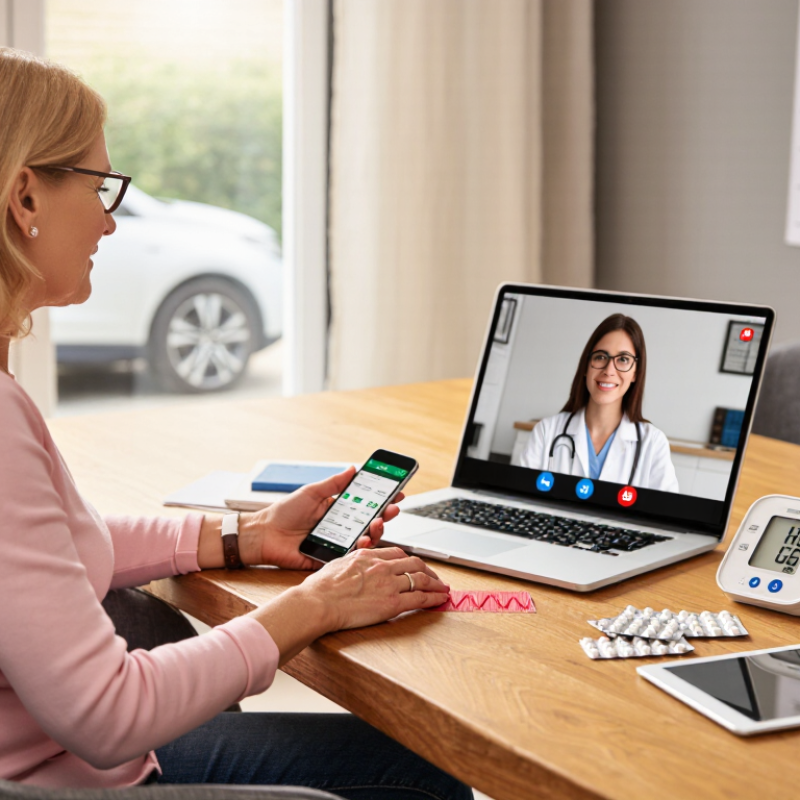
In 2026, a remote clinical trial is defined by how much study participation can happen outside a research site. It may use video visits, phone check-ins, electronic consent, and devices that record symptoms or measurements at home. Not every part is remote. Blood tests, imaging, or examinations may still require an in-person visit when they are needed for safety or reliable results.
The defining feature is coordinated clinical oversight, not simply an app or a mailed device. Participants need clear instructions, a way to ask questions, and timely contact with the study team if symptoms change. A thermometer reading or daily symptom entry can help researchers track patterns, but it does not replace medical judgment. Plans for reviewing data and responding to concerns should be clear from the start.
Convenience matters. So does access. A participant without stable internet, a quiet room, or confidence with digital tools may need phone support or another option. Devices must be appropriate for the measurements being collected, and missing entries should not be treated as proof that someone is disengaged. Remote trials can reduce travel, but they are not effortless. The details still need careful thought.
| Trial approach | What makes participation remote | Potential participant advantages | Commonly suitable activities | Important considerations |
|---|---|---|---|---|
| Hybrid decentralized trial | Combines remote activities—such as video visits, electronic consent, or local services—with visits to a research site when needed. | Can reduce the number of trips while retaining access to in-person examinations and site-based support. | Follow-up visits, questionnaires, medication checks, and some safety assessments. | Visit schedules and remote options depend on the study protocol. Some procedures still require a qualified site or local health professional. |
| Predominantly remote trial | Most study interactions take place remotely, using tools such as telephone or video calls, electronic forms, and home delivery of study materials. | May make participation more practical for people who live far from a study site or have travel, work, or caregiving constraints. | Remote interviews, symptom reporting, study education, and selected follow-up activities. | Not appropriate for every condition or intervention. A plan is needed for urgent symptoms, assessments that cannot be done remotely, and access to reliable connectivity. |
| Home-based visits | A trained health professional visits a participant’s home for protocol-approved procedures. | Can bring certain study activities closer to participants and reduce travel to a research center. | Some sample collections, vital-sign measurements, and other procedures permitted by the protocol. | Availability varies by location. Procedures must be performed by appropriately trained personnel, with suitable equipment and sample-handling processes. |
| Digital and wearable-supported participation | Participants use approved digital tools or wearable devices to submit information or record measurements outside a clinic. | May support more frequent or convenient reporting between scheduled contacts. | Electronic questionnaires, symptom diaries, activity tracking, or protocol-specified measurements. | Devices and measurements must fit the study protocol. Data quality, device access, privacy, technical support, and participant burden should be considered. |
| Local-provider-supported trial | Some study procedures take place with a local healthcare professional, while the central research team coordinates other activities remotely. | May offer an alternative to repeated long-distance trips when local services can perform the required procedures. | Protocol-approved examinations, tests, or sample collection arranged through local providers. | Local-provider involvement does not remove the need for study oversight, consistent procedures, appropriate records, and clear communication among care and research teams. |
| Site-based trial with remote options | The research site remains central, but selected tasks—such as reminders, questionnaires, or some follow-up contacts—are completed remotely. | Offers some flexibility without changing the main site-based structure of the study. | Study updates, electronic questionnaires, appointment coordination, and eligible follow-up contacts. | Remote options may be limited. Participants should check which visits and procedures require attendance at the research site. |
| How to assess the “best” option | There is no single remote-trial format that is best for every participant; the appropriate format depends on the study and individual needs. | Look for clear instructions, accessible support, reasonable travel demands, and a way to report problems or symptoms. | Ask which activities are remote, which require in-person attendance, what technology is needed, and who to contact for help. | Confirm eligibility, risks, visit requirements, data-use information, and emergency procedures with the study team before enrolling. |
| Definition: A remote or decentralized clinical trial uses technology, home-based services, local providers, or other arrangements to conduct some or all trial activities away from a traditional research site. “Remote” does not necessarily mean fully virtual: the protocol may still require in-person visits, examinations, or procedures. | ||||
It may suit people who can use video calls, connected devices, and home sample kits. A stable internet connection helps. Not for everyone.
A hybrid trial combines remote check-ins with clinic visits for exams or imaging. It may feel reassuring for complex care, though travel can be difficult.
Check whether you have a private place for calls, a well-fitting blood pressure cuff, and help with device setup. Small details matter.
Ask who reviews symptoms, how quickly someone responds, and whom to contact in an emergency. Request a clear visit schedule and safety plan.
Ask how to report missed readings, technical problems, or worsening symptoms. The plan should explain when to call and whether an in-person visit is needed.
Ask what apps, wearables, and video calls collect, who can access the data, and how long it is stored. Read the consent form carefully.
Ask how to withdraw and what happens to data already collected. Deletion may have limits. Check the consent form.
Confirm eligibility, possible costs, compensation, required local tests, and the study’s registry identifier, if listed. Vague answers deserve another question.
Remote clinical trials in 2026 use digital tools, local healthcare services, and flexible study procedures to let participants take part without traveling regularly to a central research site. Models may range from fully remote studies to hybrid trials that combine online visits with occasional in-person appointments. The best fit depends on a person’s condition, the study’s design, the level of support offered, and how accessible its procedures are. Understanding how do remote clinical trials improve patient participation means considering whether they reduce travel and scheduling burdens while still providing clear communication and appropriate care.
Before enrolling, participants should compare trial requirements, including eligibility criteria, visit frequency, available technology, and whether support is provided for using digital tools. They should also review how the study monitors safety, protects personal information, and handles questions or concerns. Carefully checking the enrollment details and discussing uncertainties with a qualified healthcare professional can help people decide whether a particular remote or hybrid trial suits their needs.

 Trial Medical